Cambodia Is Close to Canada (and not just in U.N. seating)

Almost three weeks in Cambodia brought some unexpected links with Canada. We were visiting my daughter Katie, who has turned her back on a high-flying legal career in Toronto (she was a clerk at both the Ontario Court of Appeal and the Supreme Court in Ottawa) to do good work among struggling NGO’s in Phnom Penh. Katie took us around the country, including an evening performance of a circus in Battambang that helps to give street kids a profession.

Fresh from my being mistaken as the starter at the Deer Creek Golf Club, I was standing around in my Tilley hat while the milling crowds waited to be told to head for the big top . At this point a French gentleman approached me, the authority figure, to ask loudly if I was in charge. I’m afraid that I missed the opportunity to take charge of a circus, with jugglers, acrobats and tightrope walkers . . . surely the perfect career for a retired publisher.

Later, down in the southwest corner of Cambodia, in a forested natural area with road signs warning of elephants, a more direct Canadian link appeared. We were visiting the Four Rivers Hotel , which consists of private tents set on top of floating docks on a tidal river 15 kilometres in from the Gulf of Thailand. The manager, Francois Lamontagne, revealed himself as a man from Lennoxville!

Excited conversations about Sherbrooke and North Hatley ensued. Yes, he knew Hugh MacLennan! From a later career in film in Montreal he knew my friends who worked on the Trudeau documentary, and he had great tales of Brian Mulroney and Paul Martin, another Eastern Townships man. How on earth did Francois end up running a lodge on a warm Cambodian river, where we could swim to an island where fruit grew wild on every tree? Ah, he told us, it was a long story.

When we were half an hour from departing on the boat (an African Queen lookalike, minus Humphrey Bogart) I strolled into the little library, where previous visitors had bequeathed worthy books to later guests. There, to my delight, among a smorgasbord of books in various languages, I found Too Much Happiness, by Alice Munro, with its dedication to her Port Hope son-in-law. To hold Alice’s book — even if it was the U.K. edition – while the sound of the jungle clicked and whirred around us, was almost too much happiness.
Editing Tips from Douglas Gibson (#17)

In this recurring feature, we’re sharing tips for editors from the desk of Douglas Gibson. Good for those starting out or old hands who need a reminder, these reminders form an engaging guide for sharp-eyed wordsmiths.
Tip #17
In her 2012 book The Literary Legacy of the Macmillan Company of Canada: Making Books and Mapping Culture, Ruth Panofsky quotes the editorial policy of the legendary publisher John Morgan Gray: “Gray’s ‘first job’ was to help authors realize their ‘full potential’ and he consistently followed his own ‘golden rule’ for editors: ‘[When] dealing with writers who know what they are doing don’t edit any more than requested to do; stand by to help if called on. Occasionally even the most assured writer will get too close to his work and may then welcome a hint of how it appears to someone else . . . The ideal role for the editor calls for sympathetic understanding, some talent for listening, judgment and good sense.’”


Stories About Storytellers nominated for the Lela Common Award for Canadian History

Stories About Storytellers is a nominee for the 2012 Lela Common Award for Canadian History. The other nominated titles are Richard Gwyn’s Nation Maker and Jonathan F. Vance’s Maple Leaf Empire. The awards celebrate a work of historical non-fiction on a Canadian topic by authors “honouring writing that achieves excellence without sacrificing popular appeal.” To find out more, head to the website for the Canadian Authors Association. The winner will be announced on July 28, 2012.

Publisher and Author as a Golfing Authority

On Saturday, May 5, I travelled east of Toronto to Whitby, to speak at a well-attended local Ontario Writers’ Conference. The setting was the Deer Creek Golf Club.

I was there to give a lunch-time talk to the 175 people at the conference, and was wearing my “Publisher’s Uniform.” (As a publisher I always instructed my authors that on the promotion trail they should look like their book cover photo, wearing the same clothes, hairstyle/beard, and so on. So when I’m appearing as “author” I wear the blue blazer, grey flannels, white button-down shirt, and striped tie that the unflattering Tony Jenkins caught on the book jacket.)

As you would expect, this was a much more formal outfit than that worn by the dozens of golfers who were enjoying the Deer Creek sunshine.

When I left the conference to roam around the tees before the lunch, my outfit led to a misunderstanding. I was silently standing there, watching people teeing off (in the interested manner of someone who grew up playing golf), when on two occasions, members eager to start the round mistook this well-dressed authority figure as the Official Starter. They were polite Asian Canadians, and they came up to me, bowed, and presented me with their official Starter’s Card.

I explained that I was just a spectator, and withdrew before there were any more misunderstandings. But the possibilities for mischief (“Sure, go ahead. I’m sure you’ll miss the players just in front . . . they’re further off than they look”) have stayed with me.

There may even be the start of a murder mystery plot. And a title . . . Drive, He Said.

Recommended Reading: The Disappeared

In May I’m going to be visiting Cambodia for the first time, to see my daughter Katie, who is doing good work there.

I’m doing all of the usual preparation things (or, more correctly, I’m saying, “Sounds good” when Jane suggests two nights at this hotel, then three nights at that one). But past experience shows that a layer of familiarity with a place is much better acquired from a good novel than from  a tourist guidebook. (London I’m sure, is different if you have never read Dickens.)

So I have been very pleased to read Kim Echlin’s 2009 novel The Disappeared. It’s set originally in Montreal, where a private school girl (from Miss Edgar and Miss Cramp’s School) named Ann Greves meets a young Cambodian musician/student named Serey. Over the objections of her father, they get together and live on the Bleury Street fringes of the music world.

Serey was able to get out of Cambodia before the killing times. But when, after four Khmer Rouge terrible years, the Vietnamese army moves in and opens the border again, Serey moves back home, alone, in search of his family.

Anne hears nothing from him, year after year. Then she sets off in search of her lover. Miraculously, she finds him. But she also finds Cambodia, a country suffering post-traumatic stress. And the reader — and tourist-in-preparation – learns about the horrors of the Killing Times. “Year Zero” was the slogan shouted by 14-year-olds with guns as they forced the entire population of Phnom Penh to leave their homes and start walking to the country: anyone who asked, “Why?” was shot down. And so it went, year after year.

I’ve seen the Killing Fields, but The Disappeared brings the history of the Pol Pot times alive. Whether it also catches the sense of life in Cambodia’s streets today, is a question I won’t be able to answer until I return.

Editing Tips from Douglas Gibson (#16)

In this recurring feature, we’re sharing tips for editors from the desk of Douglas Gibson. Good for those starting out or old hands who need a reminder, these reminders form an engaging guide for sharp-eyed wordsmiths.

Tip #16
Sometimes there is a clash between the wide-ranging expectations of a publisher and the difficult detailed work that the luckless editor has to do on the manuscript. This (except in the case of schizophrenics who are both publishers and editors, cough, cough) reflects a basic difference in character. As the wise John Le Carré has one of his cynical characters remark in The Russia House, “Publishers can get their minds halfway round anything.” Editors, by contrast, can’t just be halfway professionals.


Editing Tips from Douglas Gibson (#15)

In this recurring feature, we’re sharing tips for editors from the desk of Douglas Gibson. Good for those starting out or old hands who need a reminder, these reminders form an engaging guide for sharp-eyed wordsmiths.

Tip #15
Every so often the book world erupts in furious argument about whether a new title should be classed as “fiction” or “non-fiction.” My advice here is to follow The Bartender’s Rule: If a drink has any alcohol in it, it’s an alcoholic drink.
So it is with fiction. Even if a book is 99% true, the 1% that is invented makes the book fiction. Consider the horror of congratulating a non-fiction author on a particularly striking fact, or true-life scene, and being told “Oh, that scene? I made it up!” Follow The Bartender’s Rule.

Missed the previous tips? Check out Tip #1, Tip #2, Tip #3Tip #4, Tip #5, Tip #6, Tip #7, Tip #8Tip #9Tip #10, Tip #11, Tip #12, Tip #13, and Tip #14.

“Get the Lead Out” at Massey College

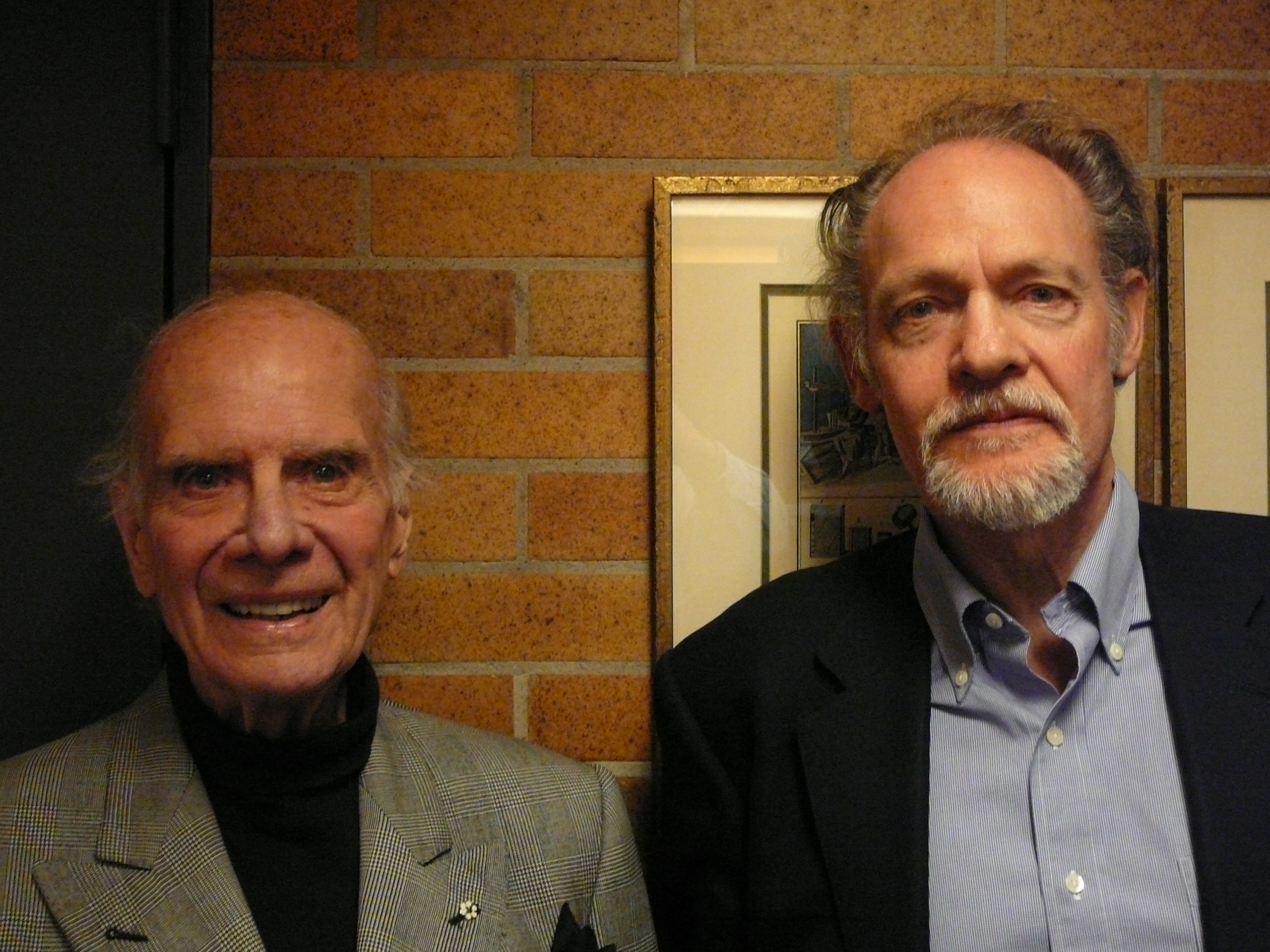
On Wednesday, March 28, Massey College was the setting for a panel discussion by a number of grand old typesetters/designers/booklovers such as Stan Bevington of Coach House Books, Andrew Steeves of Gaspereau Press, independent designer Will Reuter, and so on. The thoughtful discussion (dealing with rare topics such as the delights of letterpress printing, and with Andrew’s division of those who bought The Sentimentalists after its Giller Prize win into “readers” and “consumers”) drew a full house, including two veterans of the Canadian publishing mainstream, William Toye of Oxford University Press and yours truly. Photo is by Don McLeod.

Editing Tips from Douglas Gibson (#14)

In this recurring feature, we’re sharing tips for editors from the desk of Douglas Gibson. Good for those starting out or old hands who need a reminder, these reminders form an engaging guide for sharp-eyed wordsmiths.

Tip #14
In her fine new book, The Literary Legacy of the Macmillan Company of Canada: Making Books and Mapping Culture, Ruth Panofsky quotes the “urbane, cosmopolitan and well travelled” editor Kildare Dobbs. He wrote that the fiction writer must have “intuition and moral taste,” avoid cliché, melodrama, and especially “the curliness of a Victorian bandstand.” A strong novel was carefully structured, appropriately paced, and “told with skill and perception” if not “flourish and wit.” When these qualities are lacking in fiction, Dobbs asserted he “would rather embalm a corpse” than undertake revision.

Missed the previous tips? Check out Tip #1, Tip #2, Tip #3Tip #4, Tip #5, Tip #6, Tip #7, Tip #8Tip #9Tip #10, Tip #11, Tip #12, and Tip #13.