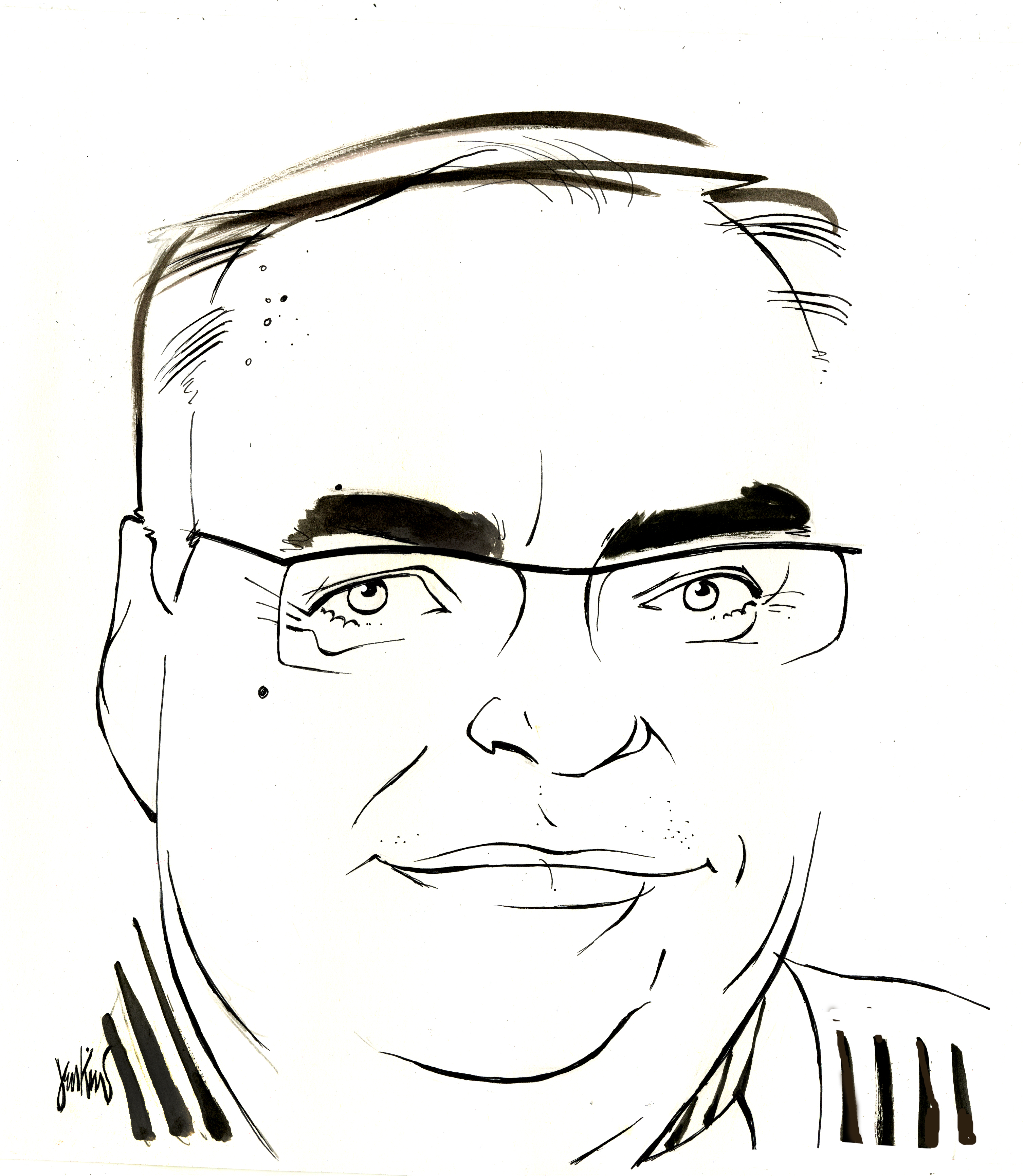
Alistair MacLeod Writes Again

I’ve spent much of my stage-show tour in the company of the clan MacLeod. In Guelph, for example, young Daniel was in the audience at The Book Shelf show. In Peterborough, Lewis, as a faculty member, organised my Trent University event. In Halifax, Alexander (author and professor) brought me to my event at St. Mary’s, where he introduced me very kindly, and also helped to arrange my tour of other Maritimes universities.

As for Alistair, he dropped in on my show at Windsor, and then joined with me in our Punch and Judy show at Eden Mills.

In the middle of summer, however, we were engaged in real work together. Hal Wake, of the Vancouver Writers’ Festival, had decided that a perfect way of marking the Festival’s 30th anniversary would be to sponsor, and publish, a new short story from his good friend Alistair. With my secret encouragement he approached Alistair, mentioning a mid-summer deadline, to which Alistair (to my amazement) assented.

Then Hal enlisted my help as editor (or swooping enforcer, if necessary). The enforcer role was not necessary. Alistair delivered the story to me in mid-summer. Since we both were slated to speak on the same afternoon (July 12) at the Humber Writers’ course, we arranged that I would send my editing suggestions by mail to Cape Breton, and then we would get together  in Toronto. And so we did, meeting in Alistair’s hotel room after lunch, with friendly discussion of the few tweaks I had to suggest (not to mention details of the fighting around Ortona in 1944 that I was able to bring to his attention). As usual, our work was improved by the copy-editing skills of Heather Sangster, who had collaborated with us on No Great Mischief in 1999.

The design and production of the 40-page chapbook was all handled by Camilla Tibbs and Hal’s team in Vancouver. At this year’s Festival in October, Alistair was present for an on-stage interview with Hal that featured a reading from the chapbook that was being launched, entitled Remembrance.

My copy has just arrived, and I’m delighted with it, and very proud of my role. I’m pleased that the final page reads “The Vancouver Writers Fest would like to thank Doug Gibson, Peter Cocking (internal design) and Jessica Sullivan (cover design) for donating their time and expertise to this project.” Donating? I’d have paid for the privilege of working once again with Alistair, to help him bring a new story into the waiting world

There’s a special joy in reading the note: “ Alistair MacLeod would like to thank Doug Gibson for his help and editorial insight.”

My role was not restricted to editing the little book. I wrote the author’s biography, and the list of other books by him (including the special Christmas book To Every Thing There Is a Season that is not widely known) and I provided the cover copy, describing the book to readers encountering it for the first time. Here’s what I wrote, possibly influenced by the rhythms of Alistair MacLeod’s work in Remembrance:

It is November 11. In the cool morning air David MacDonald stands outside his Cape Breton home, planning to attend his last Remembrance Day Parade. As he waits to be joined by two younger David MacDonalds, he remembers the Second World War. He remembers the horrors of the battle at Ortona in Italy, and what happened in Holland when the Canadians came in as liberators. He remembers how the war devastated his own family, but gave him other reasons to live.

As the classic story unfolds, told in Alistair MacLeod’s deceptively simple style, other generations enter the scene. And we, aware of how many of the linked events go back to the mistakes of war, realise on Remembrance Day that “this time comes out of that time.”

Only 600 copies of this precious little book were printed. If you would like to get your copy, at $25.00, you should quickly go to  http://www.writersfest.bc.ca/2012festival/remembrance

I have no financial involvement. But I am emotionally involved in a fine book by a fine friend, Alistair MacLeod.

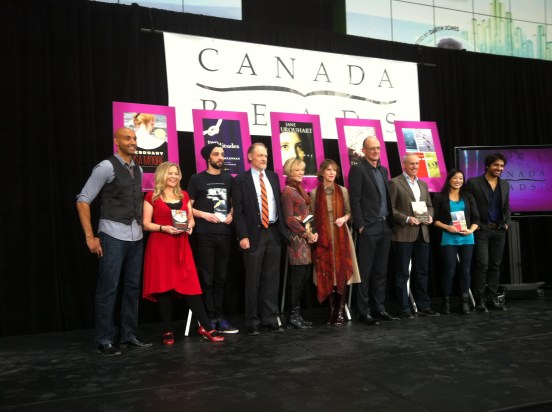
Canada reads Hugh MacLennan

CBC’s annual Battle of the Books Canada Reads announced their 2013 selections and panelists today at a reception in the broadcaster’s atrium. The books and champions are

  • February by Lisa Moore, championed by comedian Trent McClellan
  • Indian Horse by Richard Wagamese, championed by Olympic wrestler Carol Huynh
  • Away by Jane Urquhart,  championed by author Charlotte Gray
  • Two Solitudes by Hugh MacLennan, championed by actor Jay Baruchel
  • The Age of Hope by David Bergen, championed by broadcaster Ron MacLean

Since Hugh isn’t around anymore to represent his book as author, CBC has asked Doug to stand-in for Hugh and lend his special insight into Hugh’s work and Two Solitudes. Follow along at CBC Books!

Editing Tips from Douglas Gibson (#28)

In this recurring feature, we’re sharing tips for editors from the desk of Douglas Gibson. Good for those starting out or old hands who need a reminder, these guidelines form an engaging guide for sharp-eyed wordsmiths.

Tip #28

A good editor should remove clichés. Yet all too often the clichés hide in plain sight, the adjective-noun combinations so accepted by the reader’s eye and mind that they become almost a single-word notion.

What “fiasco” is not “total”? When is an “inferno” not described as “raging”? When is a “defeat” not “ignominious”? When is “ado” not preceded by “further”?

A good test for the editor is to supply the adjective (“Ignominious . . . hmm”) and see what noun springs to mind. If the answer is automatic, we have a cliché to be avoided.

All Roads Lead to Terry Fallis

Recently I wrote about my visit to Wolfville, where I stayed at The Blomidon Inn. A recent chat in our kitchen with Terry Fallis, author and neighbour, revealed that in October, precisely 25 years ago, the Blomidon Inn held Terry’s wedding reception. He had just married a Wolfville girl named Nancy Naylor who was on her way to become not only the mother of Calder and Ben, but a major figure in Ontario’s public service.

In her government role Nancy encountered Jane (now my wife, and at the time another senior civil servant), and they became close friends. This meant that when Jane and I got together, we would regularly have dinner with our friends Nancy and Terry.

Some of my stage performances have featured a section on “TERRY FALLIS: Saint, Little Red Hen, and Prizewinner.” Let me explain that.

First, the “Saint.” When Terry shyly started to try his hand at writing fiction, with a political satire named The Best Laid Plans, he never once asked me to “take a look at” his new novel. Even when he was facing months of silence from literary agents, and from other publishers, he never raised the question. He didn’t want to trade on our friendship, you see. This, in a world where people accost me at funerals, or bang into my cart at supermarkets hoping that I’ll read their manuscript, comes pretty close to sainthood.

In time, he decided to advance the situation, not by approaching his friend Doug, but by reading the first chapter on the podcast he ran as part of his PR professional life. People really liked it. So he kept going. Then he started to blog the chapters, to his usual audience, which was not used to fiction from him. But people really liked that, so he kept going. People liked the whole book so much, in fact, that he decided, what the hell, to turn into The Little Red Hen. You remember her? When no one would help her in any task she would say, “Very well, I’ll do it myself!”

So Terry decided to publish the book himself, using an electronic self-publishing system that worked well, supplying him with electronic books as well as real, paper ones. He happened to have 10 copies lying around when he read the entry rules for The Stephen Leacock Prize for Humour, and saw that self-published books were eligible, if you submitted 10 copies. It was the ultimate “Little Red Hen” moment.

The book made it to the short list, along with King John of Canada by my author, Scott Gardiner. So I was at the Leacock lunch where the prize-winner was announced . . .“Terry Fallis!”

I went up to him and said, “Terry, now you really need a publisher. Let me read your book.” And I did, and I liked it very much, and I made a few tiny tweaks to the Scotticisms employed by his irascible hero Angus, and rushed to bring the novel out as a Douglas Gibson Book.

And people loved the story of the outsider who took on the staid publishing world, and it went on to great success. There was a follow-up novel, The High Road, in 2010, which I published in a more conventional way, and which  did well. But the high point was Spring 2011, when The Best Laid Plans won the Canada Reads competition. Tick the “Prizewinner” box.

This September his third novel, Up and Down came out. The reviews have been good for this “poignantly funny third novel” (Ottawa Citizen) and “a breezy, gentle satire . . . he might have a shot at another Leacock” (Globe and Mail). But what marks Terry as a truly remarkable author is how hard he works at getting to know his readers, and how much people like his public appearances. At that kitchen meeting last week, as his editor/publisher I asked him to take me through the promotion tour he has been undertaking for Up and Down.

He told me that in just under two months he has already made 42 public appearances . . . readings, question and answer sessions, bookstore chats, inside library events, convention speeches, and so on. And in every case, he finds to his delight that he sells, and signs, not only the new book, but also the previous two books. People are catching up to this author, and they like all of his work.

This is great news for me, of course, as the proud publisher of my friend Terry.

But there’s another reason for my special pleasure in his success. He works notably hard at promoting his book. And he’s very, very good at it, because you can see the very likeable enthusiast shining through.

Like his other books, Up and Down will leave you feeling “up.”

The Embedded Biographer

The recent travails of David Petraeus and “the other woman,” his biographer, Paula Broadwell (no jokes, please, and stay away from jokes about the book title, All In) remind me of the perils of close literary association. I have been involved in many projects that worked, with the author and the subject getting along well, and others that almost produced violence.

I remember, for example, when a ghost writer for Garth Drabinsky’s book, Closer to the Sun, had a crisis meeting with him in his office one Sunday.

While Avie Bennett (the Chairman of McClelland & Stewart) and I watched glumly, the writer and Garth stood nose to nose, screaming at each other. Avie whispered to me that we were wasting our time. I counselled patience, that maybe they could work this out.

Avie was right.

On occasion the relationship between the ghost writer and the author of record, or the writer and the biographee, produces such strains that the luckless editor or publisher has to step in as referee, almost wrapping his arms around one of the combatants like a hockey linesman. The strains can extend far beyond the romantic. I remember the wife of a prominent man whose biography was in the works who came to my office to threaten suicide if the book was not to her liking.

Sometimes, as with David Petraeus and Ms. Broadwell, a dangerously close relationship develops between author and subject. Interestingly, Ms. Broadwell had a co-author on the Petraeus book named Vernon Loeb, who was “dumbfounded” by the news of the romantic liaison. But then, Mr. Loeb’s wife has described him as “the most clueless person in America.”

Sometimes, instead of an attraction developing, the opposite happens — a husband and wife author team split up in the course of writing the book. This was the case with George Jonas and Barbara Amiel, who were in the thick of writing their true-crime book about Peter Demeter, By Persons Unknown, when they broke up. They courteously came to my office to inform me of this development. Taken aback, I said predictable things about being sorry to hear it. When I politely offered to do whatever I could to help in this situation, George (an old-fashioned man with a quick wit) mentioned that he now would have a problem with his laundry.

There is a Canadian angle to all this. When Jill Kelley (suspected by Ms. Broadwell of being the other “other woman”) started to receive threatening e-mails (which brought in the FBI, and then the world), they included the words “Who do you think you are?”

It’s clear that all of the best stories prove to have links with Alice Munro.

Editing Tips from Douglas Gibson (#27)

In this recurring feature, we’re sharing tips for editors from the desk of Douglas Gibson. Good for those starting out or old hands who need a reminder, these guidelines form an engaging guide for sharp-eyed wordsmiths.

Tip #27

A tip for all writers is to avoid the use of the word “there.” If it’s used as a noun to denote location (“When we got there, we stopped.”), it’s fine.
But as soon as it enters the narrative as an adverb with the chilling words “There is” or “There are,” it serves to encourage sloppy, boring writing, usually full of static nouns, and reminding the reader of a government report.

Instead of “There are many examples . . .” try “Examples abound . . .” or “Many examples show . . .”

Editors should hunt down these “there”s, and writers should avoid them.

From Shore to Shore

Waking up to a fine fall day at The Blomidon Inn in Wolfville is a perfect start. Roaming around the inn’s varied gardens is a very good way to ease into the day. But walking into the little town then drifting down to the dykes that created the Acadian settlement is another level of happiness.

In my book I talk about my fascination with the dyking system introduced by the early Acadian settlers. So you can imagine my delight in being able to walk along the top of the historic dykes that run very close to downtown Wolfville. A class of lucky young students from Acadia was being introduced to the natural wonders of the dykes, but I walked east, away from town, noticing that the fields walled off from the sea are still so rich that some of them are devoted to growing fine crops of corn. And the Fundy sands were still red, the waters of the Bay were still blue, and the great wedge of Blomidon still stretched into the bay, like a backdrop to an Alex Colville painting.

I had seen, but never visited, Cape Blomidon, but this was the day to fix that. I drove west, then turned right towards Blomidon and reached “The Look Off” (do locals shout warnings of “Look off!” rather than “Look out!”, I wonder?). From that height you can see much of the Annapolis Valley laid out before you with the “sleepy little town” of the Acadia school song in the middle distance, looking very fine.

I drove on to the Blomidon Park (although I was tempted to drop in on Ami McKay) and climbed down the steps to walk along the beach. I wasn’t exactly dancing on the shore, but it was a delight to get red Fundy sand on my shoes, and to dip a hand into the salt water. Then it was back to the idyllic town of Canning for a fine lunch, then ho, for Halifax, and my last event. Although I did load up on local apples, Gravensteins, at a roadside stand.

Alexander MacLeod is a well-established teacher at St. Mary’s University (as well as being my friend, and a fine fiction writer, with excellent bloodlines). He had kindly arranged for me to stay at The Waverley Hotel, east on Barrington Street in downtown Halifax. It was a revelation! A traditionally furnished old Victorian hotel, where Oscar Wilde once stayed (with no comments about his room’s wallpaper ever recorded). I warmly recommend it to all literary visitors.

As for St. Mary’s, Alexander drove me to the fine old campus and established me in the room where I performed my show to about 40 kindly people, including my old friend Harry Thurston, the notable writer about the natural world. Harry, I’m glad to say, later wrote that he found my show “entertaining and moving,” which was a pleasing combination.

The next day, after a pre-breakfast stroll down the hill to where early bird fishermen were hauling dozens ( “I’ve got about 40 in the bucket here, so far”) of mackerel out of the Atlantic-facing harbour, it was time to leave that particular shore, and fly back to Toronto. But I’ll be back.

Will Ferguson’s Translation Tale Sparked Another Fine Story

My friend Bob McArthur was inspired by Will’s encounters with the Japanese language to recount this story from Toronto in the late ’80s. He was working at City Hall and had the pleasure of dealing with foreign delegations arriving to study major projects in Toronto.

In Bob’s words:  “One of the biggest of these delegations was from the Japan Building Centre. We organized a serious program for them . . . with architects and so on . . . but at that moment, many people were trying to claim credit for having been instrumental in building the SkyDome. A well-known architect who had a marginal role in the project learned of the delegation and astonishingly came to the Committee Room where we were meeting . . . and took my chair at the head of the table and began to pronounce in English about himself and his firm’s important role.”

ENTER THE JAPANESE INTERPRETER.

Bob continues, “I explained to the tour guide/ interpreter that this gentleman was not one of our presenters and was not invited to speak (unlike Rod Robbie and others who had designed the building). He kindly told the delegates so, and that they should ignore him, and when he was done we would get on with our planned program.”

Can you imagine the delights here for a bilingual observer? Here’s my unkind reconstruction:

ARCHITECT (in English): “. . . very proud of the contribution made by our firm in helping to construct this historic . . .”

TRANSLATOR (in Japanese): “You can ignore what this man is saying. He has no role here and is just boasting.”

ARCHITECT (smiling): “ . . . a great opportunity for me to explain to you just how experienced our people are in handling international projects . . . and now I’ll just pause to allow my translator to catch up . . .”

TRANSLATOR: “I have really nothing to say. We’re just waiting for this rude man to stop talking, so that we can get on with the real meeting. He should be stopping soon.”

ARCHITECT: “So if there are no questions . . . no? . . . I’ll just thank you for your attention and look forward to doing lots of business with our admired Japanese friends. And by the way, I really like sushi! Thank you.”

TRANSLATOR: “He has stopped talking. Now the man moving into the chair is our friend Bob, and we can get on with the planned meeting.”

Bob ends his story with the pleasing words, “I believe that gentleman and his famous architectural firm did not win any work in Japan.”

There’s a special pleasure in imagining the architect getting back to his office and reporting, “Yes, I got to make a pitch to them . . . and I think it went pretty well!” There may be a whole book about translation stories. A good title might be Lost in Translation.

Acadian Adventures of the Idle Rich

In Nova Scotia, all highways lead to Truro. Yet a Wolfville-bound traveller with time to spare and a love of the landscape can turn off the fast highway system at Truro and drift west along the Fundy shore, winding through little towns like the magically named Maitland. Gifted with that middle name (my mother was Jenny Maitland) I was excited to find that it is a little town laced with beautiful old houses, many now being restored.

I stopped at the local store to grab a sandwich, and casually asked how the place got its name. “It’s a native name,” I was told. My comment that this would be news to thousands of Scottish Maitlands made little impression. Could this be part of the weird intermingling of Scottish and Native history in Nova Scotia, where some believe that Glooscap was really a Scottish explorer named Sinclair? An enquiry for another time.

I drove happily on to Wolfville, pausing to notice that the incoming tide, off to the right, was racing in so fast that I could see sandbars disappearing every ten seconds.

Wolfville is a university town. Just as the ebb and flow of the Fundy tides rules the landscape, so the Acadia University year rules the town. During the academic year, when the 3,500 students transform the town, the movement of young people down from the slopes of the campus into the town is almost tidal. Driving along the main street I foolishly wondered what was causing the stop-and-go traffic. Then I realised that we were obviously between classes, and scores, even hundreds, of students were casually exerting their right to drift across the street, halting cars like mine. Not a bad traffic planning principle.

It is time to celebrate the Acadia school song. It goes:

Far above the dykes of Fundy
And its basin blue
Stands our glorious alma mater
Glorious to view.

Lift the chorus
Speed it onward
Sing it loud and clear
Hail to thee,
Acadia, hail to thee.

Far above the busy highway
And the sleepy town
Raised against the arch of heaven
Looks she proudly down.

They don’t write them like that today. I’d love to hear it sung.

I’m sorry to report that nobody serenaded me when I drove up the hill to the K.C. Irving Building to meet my gracious host, Andrea Schwenke Wyile. But before we went down to the basement theatre we paused to look in at the main hall, which is arguably the most welcoming space in any Canadian University I have seen. Almost worth going back to the world of classes and papers just to get to sit and read there, and think great thoughts.

Andrea (a specialist in books for children) was able to help me with the technical set-up, but the absence of security meant that we had to baby-sit the computer once it had been set up. Her gallant husband, Herb Wyile (author of the well-known book on Canadian historical fiction Speaking in the Past Tense, not to mention Anne of Tim Hortons) brought her food from home, and I was able to slip away to the Blomidon Inn to get into my “costume.”

As usual, before the start of the show I tried to greet my audience, mingling with them and welcoming them to what I hoped would be a good time. This evening before the show I was delighted to meet Terry Fallis’s in-laws, who live in Wolfville, and who were later pleased that I incorporated a tribute to Terry (“Saint, Little Red Hen, and Prizewinner”).

When the event started, things rapidly went downhill, because in introducing me Andrea laid great stress on the role of Jennifer Knoch, a recent and fondly remembered Acadia graduate, and the editor of my book.  I went on to repeat the tributes, so that many miles to the east Jen was blushing hotly for some reason unknown to her. The Acadia students, however, were visibly pleased by all this, as an inspiring example of good things happening to Acadia graduates just like them, and in the Q and A session I was able to reinforce this piece of inspiring news.

The show went well, the Q and A session was fun (including questions from some of Jen’s old teachers), and I signed a few books. Then I followed the line of least resistance down the hill and drove back through town to the grand old Blomidon Inn. It is such a traditional Victorian mansion that when I asked for a drink they directed me to a deserted drawing room, the Rose Room. There I sat sipping my colour-coordinated cranberry juice, and thinking that Wolfville is a fine place to be. Idle rich, indeed.